
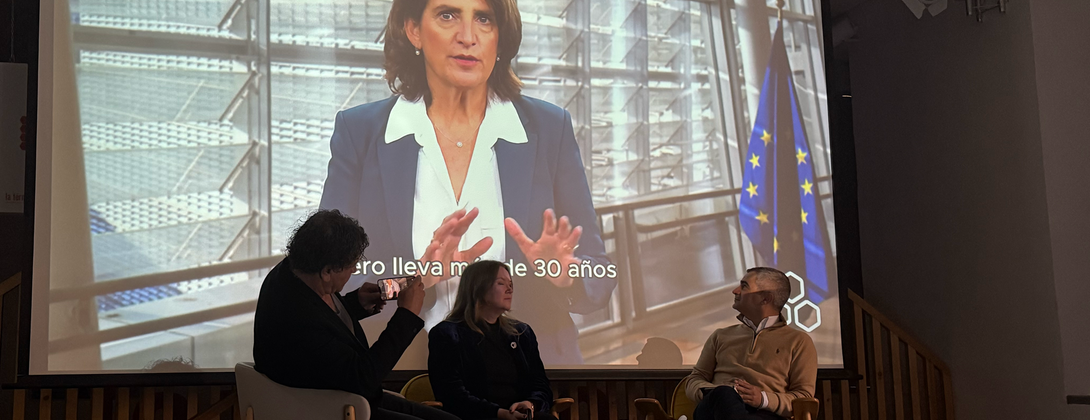
How can art and culture contribute to developing a positive forward-looking European understanding of competitiveness that is confident, open minded and attractive? Most importantly, this entails understanding Europe’s social, cultural and environmental standards as competitive strength rather than weakness.
Rather than competing against one another, the SUMMIT is a call to join forces for developing a vision of a different kind of competitiveness – one that is closer to the original meaning of the Latin word competere as in “to strive together” or “to seek together” which is the root of many words from competence to competition. Such an understanding of competitiveness would have far reaching consequences, from skills development to investment into independent digital infrastructure of the European CCI.
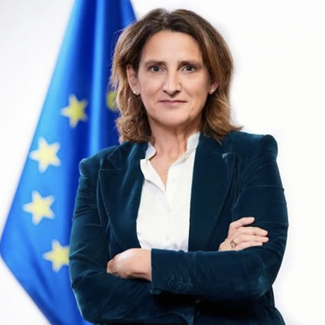
Teresa Ribera is the Executive Vice-President of the European Commission for a Clean, Just and Competitive Transition
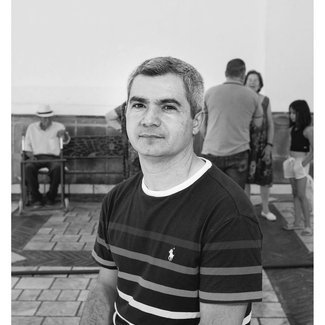
Miguel Ángel Herrera Gutiérrez is an entrepreneur and Mayor of Genalguacil
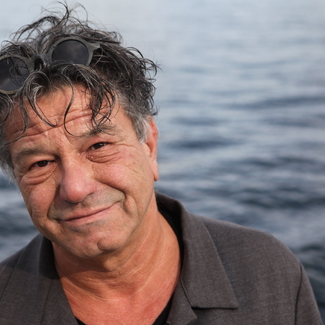
Florian Schneider is professor at NTNU and coordinator of PACESETTERS.
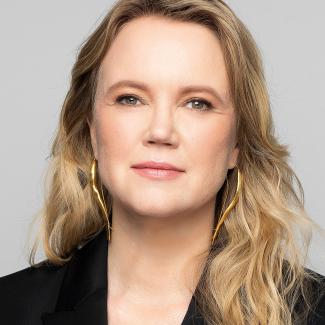
Annela Anger-Kraavi is project lead of the Climate Change Policy Group (CCPG) at the University of Cambridge.
Hello everybody! It is a pleasure to join you, even from far away, for this gathering. This SUMMIT invites us to do something rare in this world: to pause, to experiment and to imagine together; to reflect, how culture and creativity can drive the green transition and European competitiveness.
No better place, to do this, than in Genalguacil. This is a village home to fewer than 500 inhabitants. But it has for over 30 years developed a model of territorial development founded in art, culture and civic participation.
Today, it is one of the Real World Laboratories of the PACESETTERS project linking rural innovation, green transition and creativity. It reminds us, that Europe’s future has also been shaped in its villages. Europe’s villages and towns could become the backbone of the green transition. They understand the challenges and share the consequences of climate change with their citizens; they have the capacity to involve and to ensure ownership.
Many of these villages are already leading the territorial planning that responds to the environmental, climate and demographic shifts that are reshaping how we live, how we work, how we relate to one and another. The urgencies of these challenges are undeniable, but the real question is: How do we transform urgencies into meaningful action?
Across our continent many feel fatigue. Many feel exhausted by endless crises and the sense that creativity and confidence are being depleted. Yet, this is precisely where Europe’s strength lies: In our ability to connect with others and to be inspired, to create, to facilitate, to ensure that through innovation and creativity, in our capacity to let art, culture and values guide how we act.
Our social, cultural and environmental standards are not obstacles to competitiveness, on the contrary, they are its foundation. They are what makes Europe attractive, trustworthy, resilient.
PACESETTERS revives the original meaning of competitiveness: competere, to strive together. Competitiveness in this sense is not about winning at the expense of others, but about cultivating the collective intelligence that enables us to thrive.
Europe’s creative and cultural sectors are central in this transformation. They contribute as much to our economy, as many industrial sectors. Even more importantly, they bring meaning, empathy, connection. They create value: economic, but most importantly, human value – quality of life value with limited consumption of natural resources or other environmental cost.
At a time when automatation and artificial intelligence risk reducing creativity to algorithms, we must defend and empower artistic intelligence. It is human capacity that keeps our democracies vibrant and our transitions just. The PACESETTERS Summit embodies this vision. The message is very clear: Creativity is not a side effect of competitiveness. It is its source.
Through the vision of local leadership and civic engagement, you have sent a powerful message: Small municipalities can lead social and ecological innovation from the ground up. This perspective is essential, when 83% of the European territory is rural and roughly one third of our citizens live there. A sustainable transition must ensure that these territories are not left behind, but become protagonists of Europe’s ecological and competitive transformation.
Let us reclaim competitiveness as collaboration. Let us make Europe’s diversity, linguistic, cultural and territorial, our most powerful asset. That is our conviction. A few days ago we adopted a strategy to deal with culture, to reinforce culture, something that is so important, but also part of our soul as Europeans.
At a moment when the future feels uncertain, we need the courage to imagine boldly, work together and turn ideas into action. Thank you so much for setting the pace for Europe! For Europe and for the world.